Focused arrival windows
Useful updates and clear arrival timing.
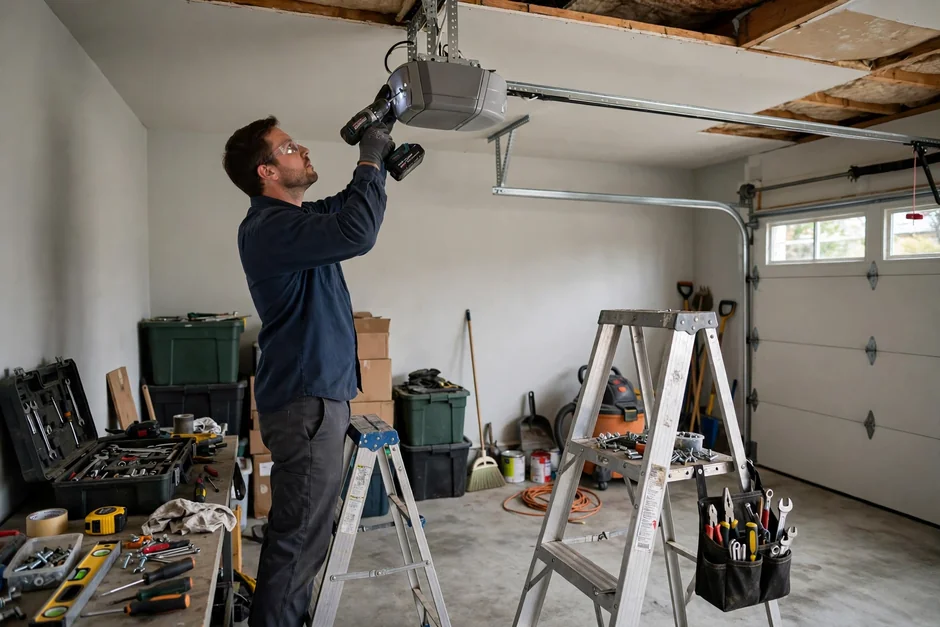
A new opener should match the weight of your door, the height of your ceiling and how you actually use the garage, from a daily driver to a workshop entrance.
Useful updates and clear arrival timing.
Review the approach and price before deciding.
Equipped vehicles and respectful cleanup.
Neighbors serving neighbors with follow-through.
Opener installation is not the same as opener repair. Repair makes sense when the motor, rail or controls can be fixed. Installation is the right page when the opener is ageing, parts are hard to find, safety features are missing, or you want a quieter belt drive, a keypad, or a smartphone-connected opener. Greenbrier Garage Door Rescue fits openers from the brands we service, including LiftMaster, Chamberlain and Genie, and our brands we serve page lists what that covers.
The door itself matters as much as the motor. A heavy or unbalanced door will strain even a new opener, so the door is checked for balance, spring condition and track alignment before the new unit is fitted. If the door needs work first, that work is explained before installation starts.
If the door itself is damaged or ageing, compare this page with garage door installation and garage door replacement. Sometimes the opener is the problem, sometimes the door is, and sometimes both need attention.
Chain drives suit many standard doors, while belt drives are quieter and often better for bedrooms above or beside the garage.
New remotes and an outside keypad are paired and tested, so every driver in the household can open the door without sharing one remote.
Photo-eye sensors are fitted at the correct height and the auto reverse function is tested before the job is finished.
The old opener, rail and controls are removed and the ceiling mount and wiring are left tidy, with the new unit set for travel and force.
Door size, weight, ceiling height and daily use decide the drive type and motor size, rather than picking the cheapest unit on a shelf.
The rail, motor and sensors are fitted, travel and force limits are set, and remotes and keypads are paired.
The door is run through full cycles from the wall control, remotes and keypad, and the safety reverse is tested before handover.
Most straightforward installations take a few hours, including removal of the old unit, fitting, setting limits and testing. Extra time is needed if the door needs balance work, the ceiling mount needs changing, or wiring needs attention.
Belt drives are quieter, which matters if a bedroom sits over the garage. Chain drives are often a good value for a standard door in a detached garage. The door weight and how often it is used matter more than the brand name alone.
Usually not, because remotes pair to a specific opener system. New remotes and keypads are normally supplied and paired during installation, and any old controls should be cleared from the system.
Not always. A remote, battery, sensor or wall control problem can often be repaired. Installation is worth considering when the motor itself fails, parts are no longer available, or the opener lacks modern safety sensors.
If your question is not listed, call the local team and describe what the door is doing. That detail usually points to the right next step.
Ask the local teamShare what is happening and receive a clear next step from the local team.